French
 German
 Italian
 Arabic
 Japanese
 Spanish
 Korean
 Russian
 Portuguese
 Dutch
Dutch
 Norwegian
 Finnish
 Swedish


 Select the perfect handcrafted wall decoration pieces to enhance your business space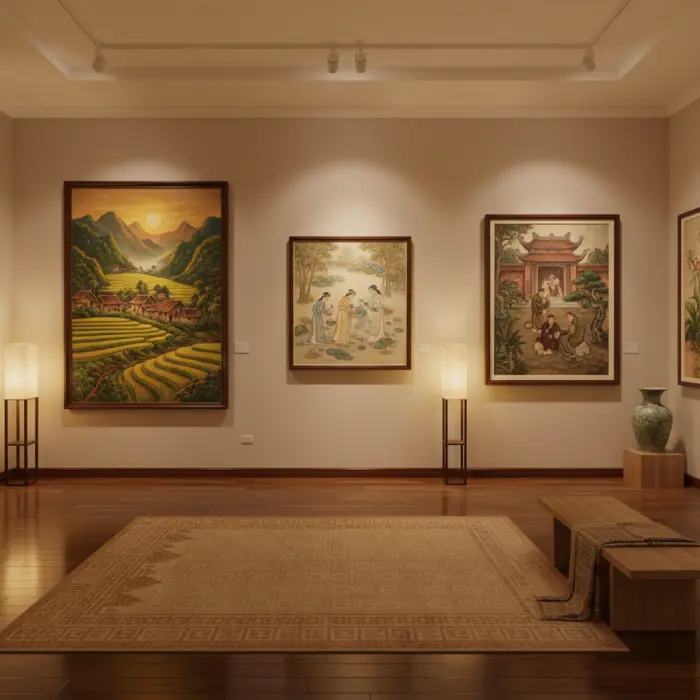
Vietnam wall art is much more than decoration—it's a profound narrative woven by centuries of Vietnamese tradition, culture, and daily living. Each piece tells a story rooted in history, reflecting the nation's journey from ancient dynasties to modernity while capturing the vibrant tapestry of its people's everyday experiences. This article explores how Vietnamese wall art, in forms like lacquer painting and silk painting, draws inspiration from the country's historical events and day-to-day life, becoming a living archive of Vietnam's cultural evolution. For collectors, interior designers, and business buyers, understanding these origins not only enriches appreciation but opens opportunities to integrate captivating Vietnamese art into contemporary spaces.
Table of Contents
- Historical Influences in Vietnamese Wall Art
- Representation of Daily Life in Vietnamese Art
- The Artistic Process and Craftsmanship
- Purchasing and Integrating Vietnamese Wall Art
- Conclusion
Historical Influences in Vietnamese Wall Art
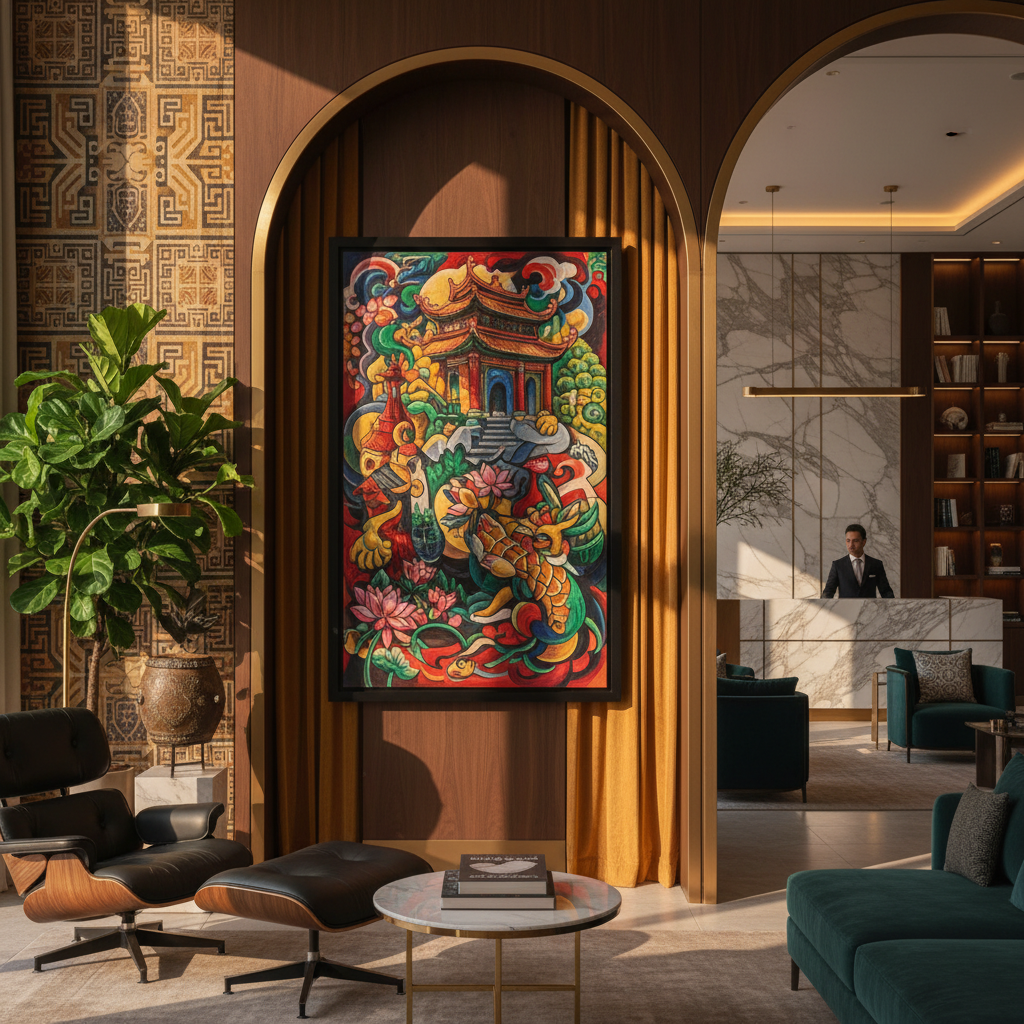
Vietnamese art has always been shaped by the nation's storied timeline, capturing legends, dynastic grandeur, spiritual beliefs, and the resilience of its people. From the earliest days, the visual language of Vietnam wall art has reflected its rich cultural foundations:
-
Đông Sơn culture: Ancient bronze-casting skills are evident in decorative motifs and Dong Son drums, echoing both ceremonial and social commentary roles. These artifacts often appear as powerful cultural symbols in paintings.
-
Sa Huynh and Oc Eo civilisations: These periods introduced distinctive jewelry, pottery, and architecture, which continue to inspire traditional Vietnamese aesthetics.
-
Influence of Dynasties and Temples: The Lý dynasty, with its revered art and architecture (notably the One Pillar Pagoda and Temple of Literature), provides recurring imagery, such as the Vietnamese dragon and representations of Mandarin officials, which are often depicted in Vietnamese wall art to invoke a sense of heritage.
-
Chinese Influence and French Colonial Period: Elements like Chữ Hán Chữ Nôm and the evolution into the Vietnamese alphabet reflect cross-cultural exchange. The French colonial era, especially through the founding of the Indochina Fine Arts College, opened new perspectives—merging Western oil-based paints, linseed oil techniques, and local artistry.
-
War, Liberation and Doi Moi: Events like the battles for independence and the social transformation of the Doi Moi period produced powerful Vietnamese art filled with social commentary and patriotic spirit.
-
Traditional Techniques and Materials:
-
Lacquer painting (sơn mài), innovated by Vietnamese masters like Nguyen Gia Tri using natural pigments, crafts intricate, durable works with lustrous depth. Vietnamese lacquer painting is distinguished globally for its richness and technique.
-
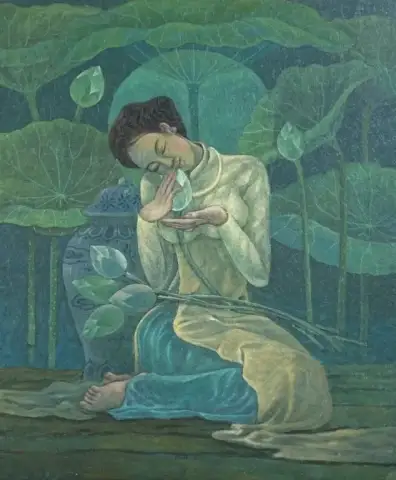
Silk painting: Vietnamese silk paintings, introduced by artists such as Nguyen Phan Chanh, employ delicate dyes and a mastery of form to capture rural life and subtle emotion, offering grace and vivid storytelling.
-
Neolithic Vietnamese pottery: The creative legacy continues, as historical craftsmanship informs both form and symbolism in contemporary Vietnamese oil paintings.
-
Representation of Daily Life in Vietnamese Art
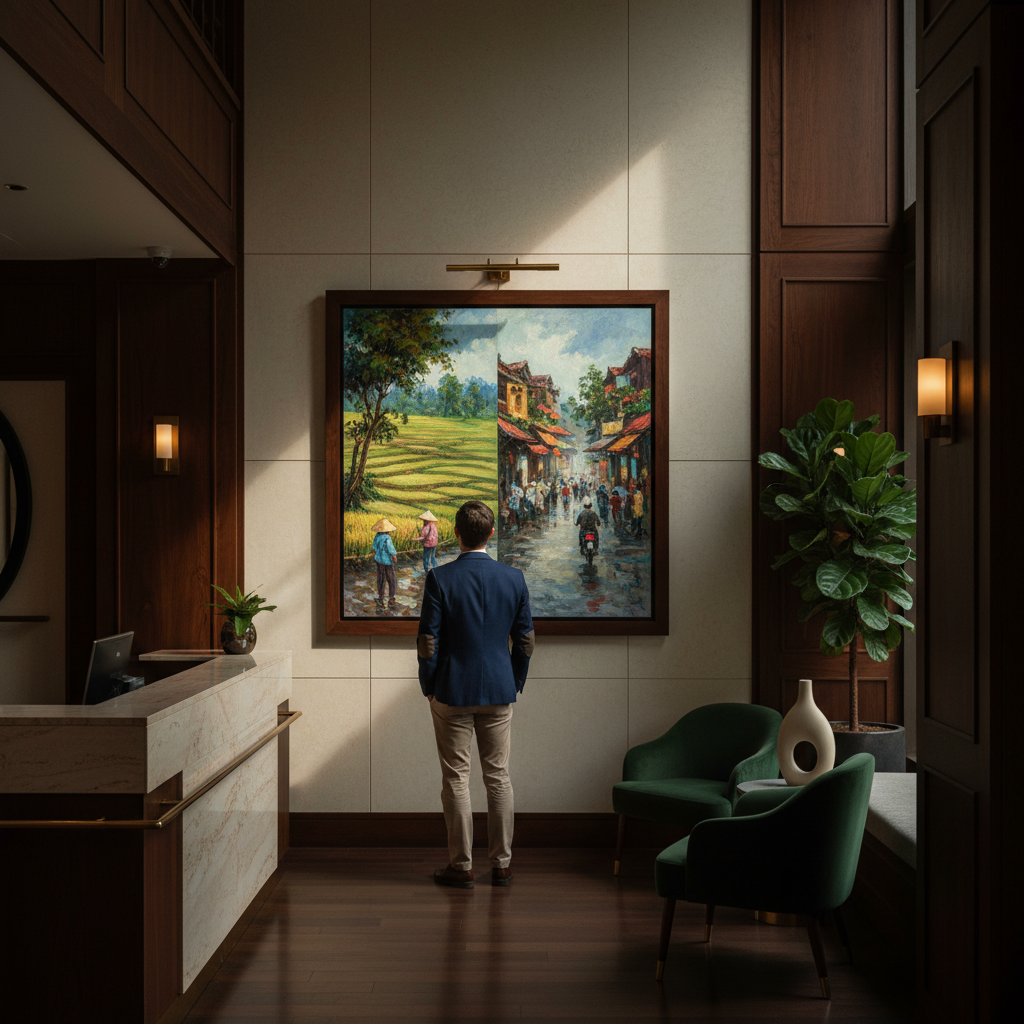
Vietnam wall art is lauded for celebrating the everyday—the pulse of rural and city life, time-honored rituals, and the warmth of family. These themes form the heart of Vietnamese art:
-
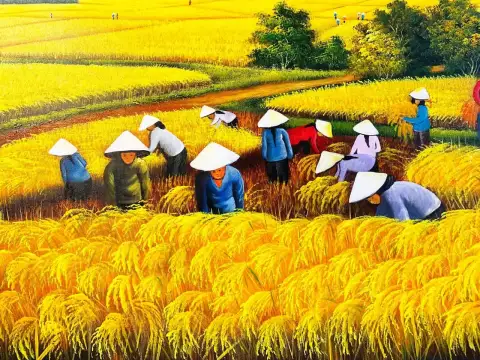
Rural life: From lush rice paddies to Dong Ho village festivities, paintings immortalize communal labor, seasonal harvests, and the rhythms of the countryside. Traditional scenes—water puppetry, bustling markets, and families gathered under monsoon skies—offer authentic glimpses into village existence.
-
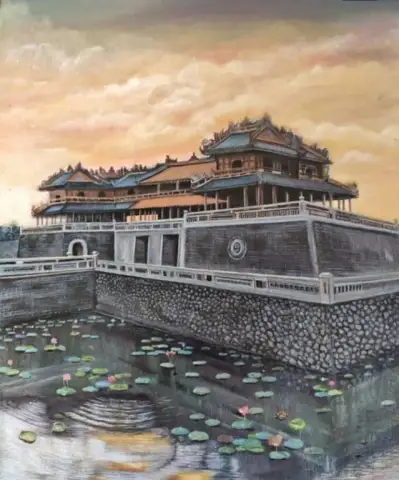
Urban and temple life: Iconic locales like Hoi An, Hue, and ancient pagodas appear frequently, as do festivals, schoolchildren learning with the Vietnamese alphabet, and monks at the Temple of Literature. These scenes highlight respect for education, spirituality, and tradition.
-
Cultural rituals and music: Themes such as ca trù and the performance arts are woven into art, as are depictions of Vietnamese poems inscribed in Chữ Nôm. Together, they capture intangible heritage in visual form.
-
Use of colors and symbolism: Artists draw on cultural symbols—like the Vietnamese dragon for strength, the Dong Son drums for continuity, or motifs from Mandarin official robes—to evoke specific historical narratives and emotions. Natural pigments derived from traditional sources further imbue works with authenticity.
-
Social commentary: Many pieces feature nuanced depictions that critique or celebrate daily struggles, prosperity, or changes, making Vietnamese oil paintings and silk works more than decorative—they are reflections of evolving society.
The Artistic Process and Craftsmanship
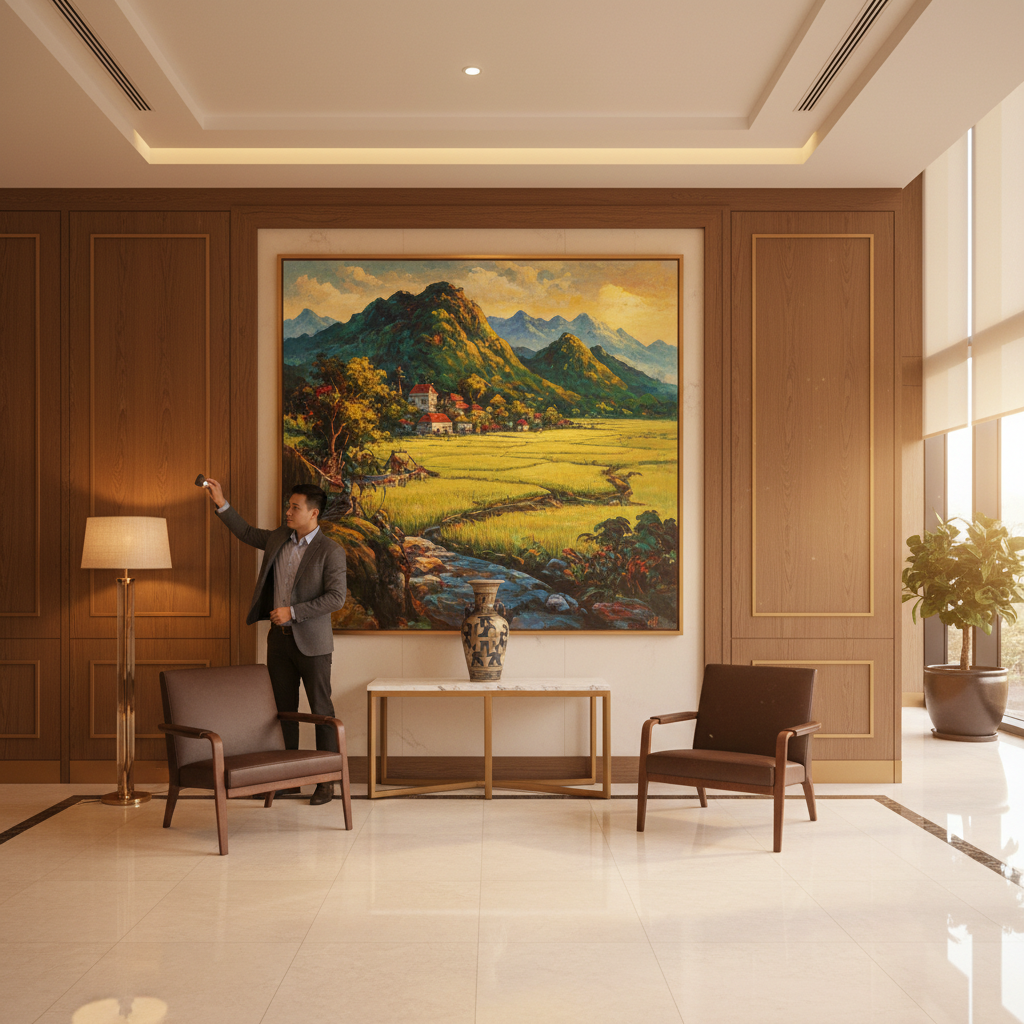
The creation of Vietnamese wall art is a disciplined, multi-faceted process that blends inherited craft with individual artistic vision.
-
Traditional vs. Modern Techniques: Age-old lacquer and silk painting methods coexist with contemporary oil-based paints, introducing versatility and new textures to Vietnamese art. The use of linseed oil, for example, allows for richer colors and more durable finishes in Vietnamese oil paintings.
-
Notable Vietnamese artists: Masters such as Nguyen Gia Tri (famed for sơn mài), Nguyen Phan Chanh (for silk painting), and To Ngoc Van (oil painting pioneer) left indelible marks on art history. Today, their influence guides new generations featured in the Vietnam National Fine Arts Museum, Ho Chi Minh City Fine Arts Museum, and Hue Fine Arts Museum.
-
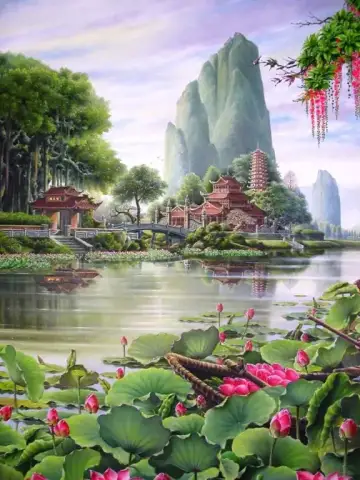
Geography and nature’s impact: The diverse landscapes, from northern mountains to southern deltas, inspire both subject matter and stylization. Hoi An’s lantern-lit streets, coastal fishing scenes, and rustic village vistas exemplify the integration of nature and architecture in Vietnamese art.
-
Craftsmanship: Pieces are often characterized by meticulous layering, use of native natural pigments, and reverence for artistic tradition. The process emphasizes harmony, balance, and an appreciation for subtlety, reflecting the traditional Vietnamese aesthetics that define the genre.
Purchasing and Integrating Vietnamese Wall Art
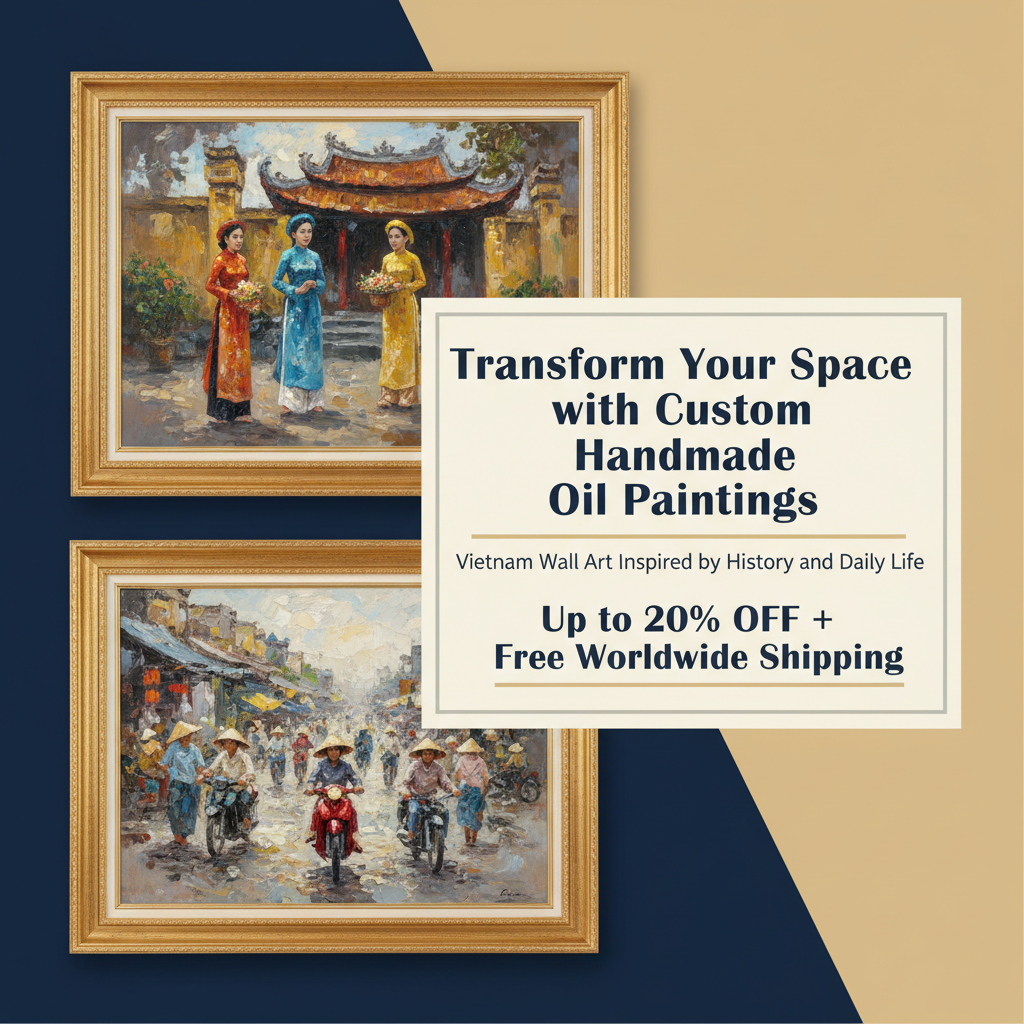
For businesses, interior designers, or collectors seeking to invest in Vietnamese wall art, understanding the art market and thoughtful integration is vital:
-
The art market: Vietnamese art is accessible via various online platforms (such as Fine Art America or Etsy) and reputable galleries or exhibitions across Vietnam. Institutions like the Vietnam National Fine Arts Museum offer curated selections that assure authenticity.
-
Identifying authenticity: Seek provenance, signatures by Vietnamese artists, and characteristic techniques like sơn mài or traditional silk painting. Recognize marks of distinguished schools such as Indochina Fine Arts College or the use of natural pigments uniquely found in Vietnamese lacquer painting.
-
Investment and value: Prices vary based on medium, artist reputation, and rarity. Vietnamese lacquer and silk paintings by acknowledged Vietnamese masters can command significant prices and gain value as collector items.
-
Decor ideas and modern integration:
-
Showcase Vietnam wall art in reception areas, conference rooms, or home spaces to evoke culture and inspire conversation.
-
Choose Vietnamese oil paintings, lacquer panels, or silk works to create a culturally rich ambiance.
-
Integrate rural life, motifs of the Vietnamese dragon, or scenes from Hoi An for a modern yet timeless look.
-
Businesses can elevate their environments by commissioning handmade custom oil paintings from Lenoir Decor, ensuring pieces that reflect the true depth of Vietnamese aesthetics and history while meeting unique space and branding needs.
Conclusion
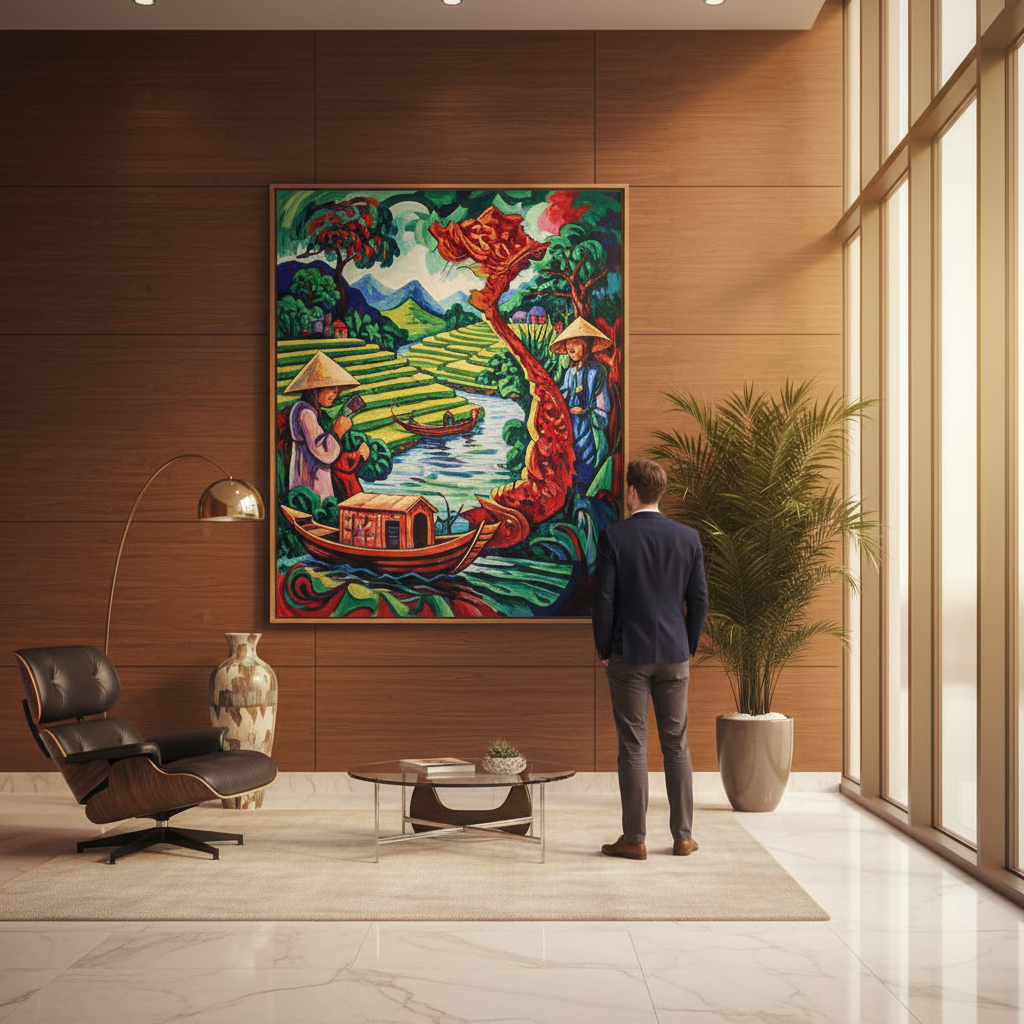
Bring the spirit of Vietnam into your space—start your art journey now. Vietnamese wall art is not only a testament to centuries of history and artistic innovation but also a vibrant bridge to living culture. By exploring, collecting, and thoughtfully integrating these pieces, you help preserve and celebrate the remarkable story of Vietnam's daily life and its enduring creative legacy.