French
 German
 Italian
 Arabic
 Japanese
 Spanish
 Korean
 Russian
 Portuguese
 Dutch
Dutch
 Norwegian
 Finnish
 Swedish






 Select the perfect handcrafted wall decoration pieces to enhance your business space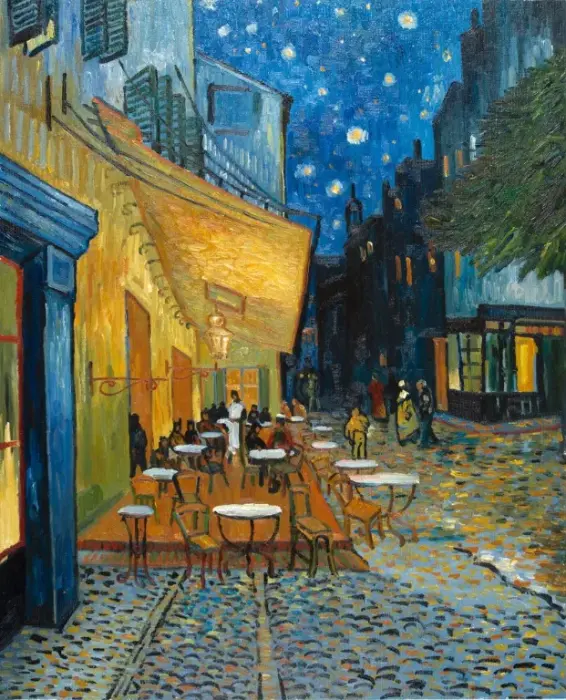
Vincent van Gogh's painting "Café Terrace at Night" stands as one of the most recognizable works in art history. This masterpiece oil on canvas, created in September 1888 during his productive period in Arles, France, captures vibrant nightlife with unprecedented warmth and luminosity. The night scene depicts a bustling café terrace illuminated by gas lamps against a star-filled sky of cobalt blue.
This iconic night painting represents Van Gogh's revolutionary approach to nocturnal scenes, demonstrating his ability to find beauty in everyday moments. The work's enduring popularity stems from its visual appeal, fascinating creation story, innovative techniques, and profound influence on subsequent generations of artists and art collectors worldwide.
Table Of Content
- Who Painted Cafe Terrace at Night and Why It Matters
- Other Names and Historical Background of Cafe Terrace at Night
- How Van Gogh Painted Cafe Terrace at Night
- Cafe Terrace at Night vs. Starry Night — Which Came First?
- Where Can You See Café Terrace at Night Today?
- The Value of Café Terrace at Night and Why It Was Not Signed
- Is Café Terrace at Night for Sale? (And How You Can Own It)
- Conclusion: The Enduring Legacy of Café Terrace at Night
How Van Gogh Painting Café at Night Was Created - Techniques and Process
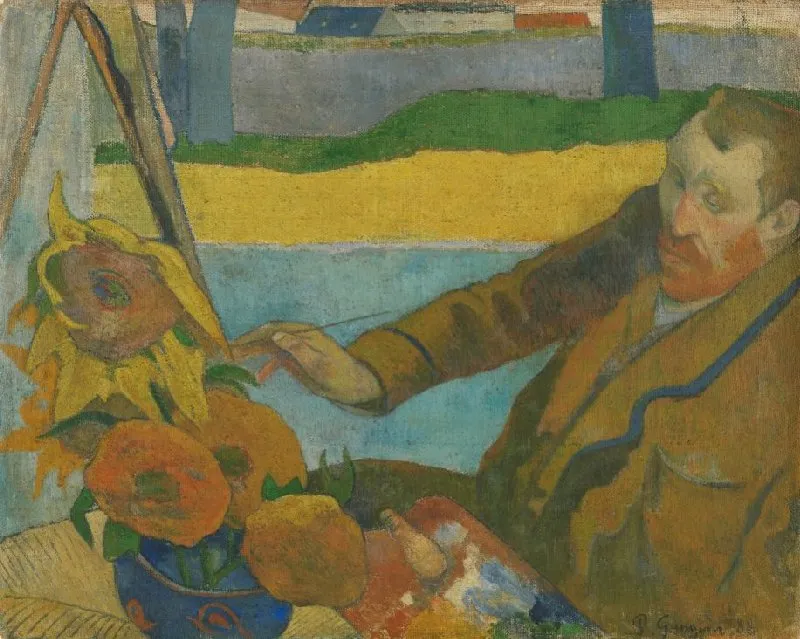
Vincent Willem van Gogh (1853-1890), the Dutch Post-Impressionist master, created this work during one of his most productive periods. After moving to Arles in February 1888, he sought the brilliant Mediterranean light that transformed his artistic vision. Working from The Yellow House, by September 1888, Van Gogh had developed his distinctive style that would influence many future art collectors.
Bring Van Gogh's genius home with a hand-painted reproduction.
This night scene matters profoundly because it represents Van Gogh's first major nocturne. Instead of traditional blacks and browns for darkness, he illuminated night with brilliant yellows, oranges, and blues—revolutionary for its time. The work demonstrates his belief that night could be more colorful than day, influencing countless artists who followed. Art historians note this painting's vibrant energy that set it apart from conventional night paintings of the era.
Other Names and Historical Background of Café Terrace at Night
"Café Terrace at Night" has several names: "The Café Terrace on the Place du Forum," "Terrasse du café le soir," or simply "Café at Night." In Dutch it's "Caféterras bij nacht," in French "Terrasse de café la nuit." Some art historians also distinguish it from Van Gogh's related work "The Night Café," painted in the same period.
Created in September 1888 while Van Gogh lived in his famous Yellow House in Arles, this period marked intense creativity inspired by Provence's distinctive light. The café was located on Place du Forum, Arles' social heart. Gas lighting in European cities made nighttime outdoor dining popular, creating the scene Van Gogh immortalized during the optimistic Belle Époque period. This work became a cornerstone of many prestigious art collections worldwide.
How Van Gogh Painted Café Terrace at Night
Van Gogh painted this work en plein air—outdoors on location—unusual for night scenes. Most artists sketched scenes during day then painted in studios, but Van Gogh wanted authentic night atmosphere and lighting effects for this oil on canvas masterpiece.
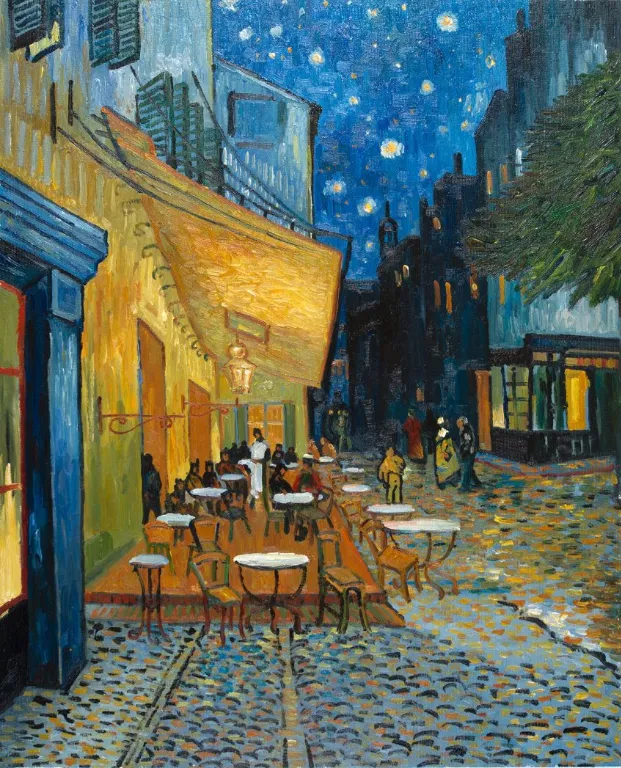
Experience this magical night scene in your own space daily.
His technique demonstrates mastery of impasto, applying paint thickly for texture. The yellow café areas appear to glow with inner light through energetic brushstrokes creating movement and vitality. Van Gogh's sophisticated color gradation techniques gave the starry sky remarkable depth. Influenced by Louis Anquetin's bold outlines and flat bright colors, Van Gogh's version was more emotionally expressive. Some art historians suggest hidden religious symbolism, with twelve figures and a central standing figure referencing the Last Supper. This approach would later inspire his famous "Starry Night over the Rhone."
Café Terrace at Night vs. Starry Night — Which Came First?
"Café Terrace at Night" predates "The Starry Night" by nearly a year. Van Gogh painted the café scene in September 1888 in Arles, while "The Starry Night" was created in June 1889 during his asylum stay in Saint-Rémy-de-Provence. Both night paintings showcase his fascination with starry skies and artificial lighting.

Own both iconic night masterpieces with museum-quality reproductions.
The chronology shows Van Gogh's artistic evolution. "Café Terrace at Night" was created during stability and productivity, radiating warmth and social connection. "The Starry Night" emerged from mental turmoil, featuring more fantastical interpretation. The earlier work shows restraint in brushwork with clearly defined colors, while the later displays expressive swirling brushstrokes. Many art collectors and painting academy students choose museum-quality reproductions to enjoy the painting's distinctive warmth daily. His brother Theo van Gogh supported Vincent throughout both creative periods.
Where Can You See Café Terrace at Night Today?
The original Vincent van Gogh's painting resides permanently in the Kröller-Müller Museum in Otterlo, Netherlands, since 1975. Located within Hoge Veluwe National Park, this museum houses nearly 90 Van Gogh paintings and 180 drawings in their prestigious art collection, making it essential for understanding his complete work. The institution was founded by art patron Helene Kröller-Müller.

In Arles, France, the actual location still exists as a tourist destination. Place du Forum remains largely unchanged architecturally, and visitors can stand where Van Gogh painted this celebrated night scene. The current establishment, Café Van Gogh, resembles the painting with yellow awnings and outdoor seating. However, the exact café no longer operates as in Van Gogh's time, having been renovated and modernized significantly from its original Belle Époque appearance.
The Value of Café Terrace at Night and Why It Was Not Signed
"Café Terrace at Night" is considered priceless, transcending monetary valuation. Art historians and market experts estimate it could potentially sell for over $200 million if ever auctioned, though this is highly unlikely given its museum status and importance to art collections worldwide.
Van Gogh's correspondence with his brother Theo van Gogh reveals why this oil on canvas masterpiece wasn't signed. He believed his paintings spoke for themselves, writing "I want people to say of my work, 'that man feels deeply.'" His rapid working method focused on capturing immediate impressions rather than establishing artistic identity through signatures. The absence relates to his lack of commercial success—he rarely expected to sell works. Authentication now relies on distinctive brushwork and techniques rather than signatures, particularly important for art collectors and painting academy scholars.
Is Café Terrace at Night for Sale? (And How You Can Own It)
Vincent van Gogh's painting "Café Terrace at Night" is definitively not for sale. As a cornerstone of the Kröller-Müller Museum's permanent collection, it's legally bound to remain in public hands for future generations. The painting is protected by Dutch law and international cultural heritage agreements, ensuring this masterpiece night painting remains accessible.
.webp)
However, art enthusiasts and art collectors can experience Van Gogh's masterpiece through high-quality hand-painted reproductions—the only legitimate way to "own" this iconic work. Museum-quality reproductions by skilled artists using traditional oil painting techniques capture much of the original's emotional impact. These pieces serve as educational tools for painting academy students, inspire creativity, and often appreciate in value over time when created by renowned reproduction artists specializing in night scenes.
Conclusion: The Enduring Legacy of Café Terrace at Night
Vincent van Gogh's "Café Terrace at Night" continues captivating viewers over 130 years after creation, demonstrating his revolutionary vision and ability to find beauty in ordinary moments. This masterpiece changed how artists approached night scenes, proving night could be vibrant and alive. The painting's vibrant energy and innovative approach to depicting starry skies influenced countless subsequent works.
While the original remains preserved in the Kröller-Müller Museum, the painting's spirit lives through countless reproductions in art collections worldwide. For those wishing to bring Van Gogh's vision of warmth, community, and beauty into daily lives, a carefully crafted reproduction offers the perfect solution—allowing this timeless masterpiece to illuminate and inspire future generations of art patrons.