French
 German
 Italian
 Arabic
 Japanese
 Spanish
 Korean
 Russian
 Portuguese
 Dutch
Dutch
 Norwegian
 Finnish
 Swedish

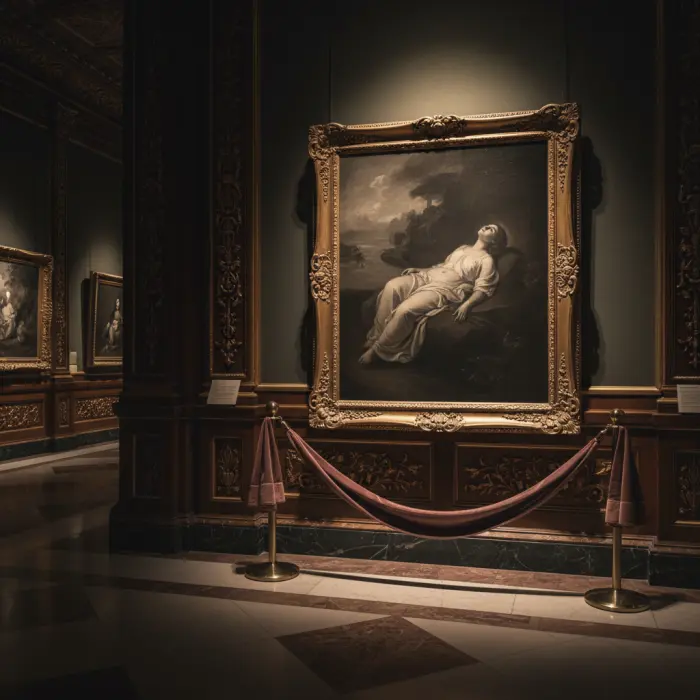
The young martyr painting continues to captivate art lovers and historians nearly two centuries after its creation. Painted by the renowned French painter Paul Delaroche in 1853, this oil on canvas painting, formally titled "La Jeune Martyre," captures both emotional depth and cultural significance. Delaroche’s evocative depiction of Christian martyrdom is arguably unrivaled in nineteenth-century French painting, offering a powerful exploration of faith, innocence, and sacrifice. As we journey through the rich symbolism, romantic style, and historical context of this masterpiece, we also glimpse its echo in later works—from depression artworks and frida kahlo floral motifs to spiritual imagery that endures in Western European art history. Whether you’re an academic, a gallery owner, or a business seeking handmade custom oil paintings for your collection, this article is your authoritative guide to the legacy and meaning behind "The Young Martyr."
Table of Contents
- Historical Context: Roots of Romanticism and Martyrdom
- Artist Background: Paul Delaroche and His Lasting Influence
- Symbolic Meaning: Understanding Religious and Visual Metaphors
- Reception, Legacy, and Continued Exploration
- Conclusion
Historical Context: Roots of Romanticism and Martyrdom
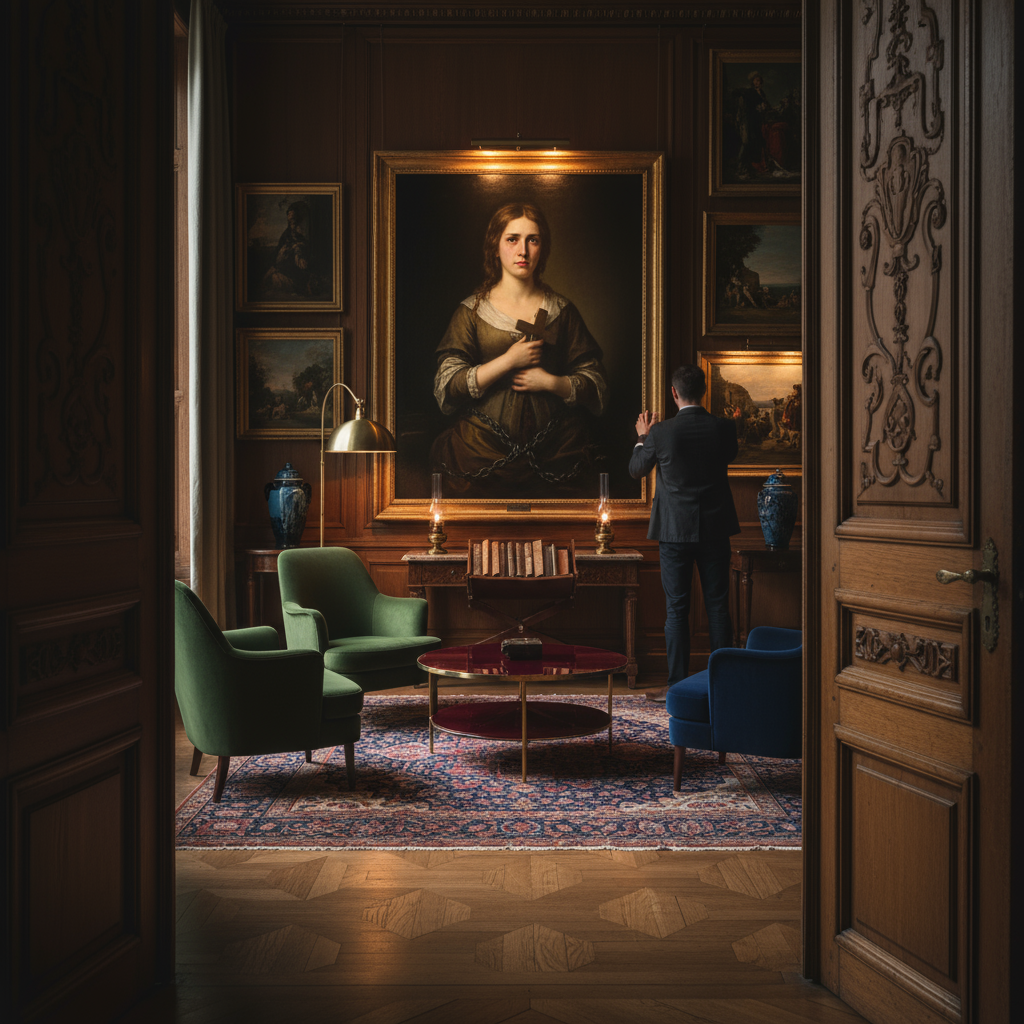
Paul Delaroche completed "La Jeune Martyre" in 1853, during a turbulent period of mid-nineteenth-century France. This era was marked by the aftereffects of the French Revolution, social upheaval, and the continued tension between church and state. As both an artist and a commentator, Delaroche was drawn to emotionally charged history paintings reflecting the struggles of the human spirit.
- French painter and socio-political environment: In response to shifting values, Delaroche, along with contemporaries at the École des Beaux-Arts, embraced the emotional resonance characteristic of the romantic style. Unlike the rationality celebrated in preceding neoclassical works, Romanticism invited a deep dive into personal sacrifice and spiritual turmoil, resonating powerfully with a society fraught with existential questions.
- Nineteenth-century French painting: The broader artistic landscape of Delaroche’s time was shaped by a fascination with drama and intense narratives—a stark contrast to the calm composure of earlier centuries. Paintings such as Adam Elsheimer’s biblical scenes and Pietro Perugino’s gentle religious frescos paved the way for a movement contextualizing contemporary anxieties within historical and religious narratives.
- Christian martyrs and Christian martyrdom: The image of the sacrificial victim—whether invoked through the story of Saint Lawrence, the wheel torture of Catherine wheel, or echoing tragedy as with Lady Jane Grey—became a recurring motif. Delaroche’s rendering of a lone, serene woman floating in water is steeped in this context, making the painting a poignant representation of Christian religious painting and memorializing the countless Christian martyrs lost to faith-driven persecution.
Artist Background: Paul Delaroche and His Lasting Influence

Paul Delaroche (1797–1856) was a pillar of Western European art history, bridging the gap between Renaissance and Modern Art History. Trained among the icons of the École des Beaux-Arts, Delaroche drew inspiration from sources as varied as Fra Filippo Lippi, the School of Athens, and Mona Lisa. His approach blended historical accuracy with the imaginative flourishes of romantic style—a synthesis that gave soul and immediacy to his historical subjects.
- Major influences: Delaroche was captivated by legendary figures and dramatic episodes. Works like his "Lady Jane Grey" and depictions inspired by Queen Elizabeth I captured moments of poignant transition, not unlike the tension embodied in "The Young Martyr." His deep study of past masters—Renaissance luminaries like Pietro Perugino and Adam Elsheimer—sharpened his eye for both narrative and emotional nuance.
- Artistic style and techniques: Renowned for his meticulous techniques in oil on canvas painting, Delaroche’s style is defined by fine detail, soft lighting, and an uncanny ability to bring stillness to fraught moments. He excelled at painting scenes that hover at the intersection of history, memory, and imagination, each work marked by a pictorial sign or motif—such as the guardian angel or spectral glow—that reinforced the narrative's theme. His palette, compositions, and scholarly research solidified his reputation as a master of romantic style and champion of history paintings.
- Legacy: Delaroche’s influence persists in the narrative-driven approach seen in later artists, as well as in institutions like the National Gallery, London and Musée des Beaux-Arts, who preserve and exhibit his works. Custom reproductions and thematic commissions, such as those facilitated by Lenoir Decor’s handmade oil paintings service, continue to celebrate his legacy for contemporary collectors, gallerists, and corporate clients.
Symbolic Meaning: Understanding Religious and Visual Metaphors
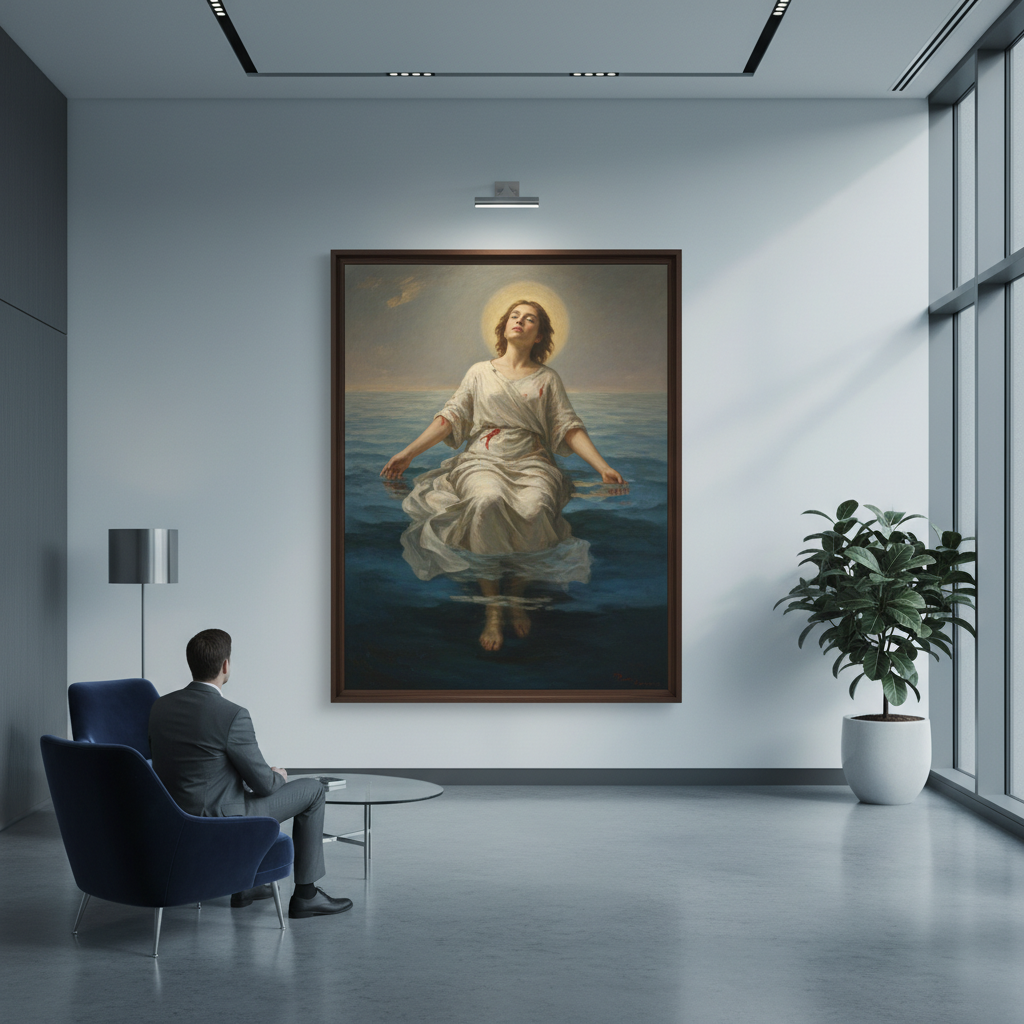
At the heart of the young martyr painting lies a meditation on suffering, faith, and transcendence. The serene, luminous figure drifting in the water is interpreted as a Christian Ophelia—a victim of persecution whose faith remains unbroken even in the face of death. This image draws from centuries of Christian religious painting, evoking both collective memory and individual empathy.
- Religious symbolism: The painting’s direct references to Christian martyrdom, like the subtle trace of a martyr’s palm or presence of a guardian angel, imbue it with spiritual gravitas. It resonates with the fate of saints like Saint Lawrence and the tortured history of martyrs condemned by the Catherine wheel, visually narrating the price of belief.
- Visual metaphors: Delaroche’s deployment of water underlines both purity and release—a motif shared with figures like Ophelia in Shakespearean lore. The interplay of soft light, gentle shadows, and a subdued color palette highlights sacrifice while inviting contemplation of innocence and redemption. In this, the work mirrors both the melancholy of depression artworks and the delicate extravagance found in frida kahlo floral arrangements.
- Pictorial sign and emotional depth: The richness of the scene, from the spectral rays of light to the angelic calm of the martyr’s expression, is a testament to Delaroche’s mastery of emotional depth. Each element becomes a pictorial sign drawing the viewer into the psychological landscape of the painting. Such elements provide inspiration for modern decor applications and custom paintings, offering businesses a unique avenue to evoke peace, reflection, or historical gravitas in their commercial spaces.
Reception, Legacy, and Continued Exploration
Upon its unveiling, "La Jeune Martyre" was lauded for its technical brilliance and emotional impact. Critics and public alike acknowledged Paul Delaroche’s unparalleled ability to merge narrative and feeling, reinforcing his standing in the annals of art history.
- Art historical reception: The painting was acquired and displayed by leading institutions, including the Musée des Beaux-Arts, with related works appearing in international collections such as the National Gallery, London. Its enduring allure inspired not only critical study but also artistic reinterpretation—its influence spanning from nineteenth-century masterpieces to present-day renaissance and modern art history surveys.
- Cultural impact: The young martyr painting remains a touchstone in Western European art history for depictions of sacrifice, spiritual yearning, and vulnerability. It is frequently compared to works like the Mona Lisa for its enigmatic, haunting atmosphere and the School of Athens for its scholarship and depth. Modern artists echo its themes, as seen in depression artworks or reinterpretations blending frida kahlo floral symbolism.
- further learning and engagement: Businesses and collectors interested in the evocative power of Delaroche’s imagery can access high-resolution images, guided video analyses, and even commission custom oil on canvas paintings through firms like Lenoir Decor. Interactive quizzes and virtual exhibit tours provide additional entry points for engaging with the symbolism and visual techniques at play, while recommended readings and museum links deepen understanding without focusing on direct competitors. This living legacy confirms Delaroche’s lasting influence on both the scholarly and commercial appreciation of historic art.

Conclusion
Discover the timeless power of the young martyr painting today. As both a masterpiece of romantic style and a lens into the complexities of faith and sacrifice, Delaroche’s work continues to stir audiences and inspire new interpretations. Whether for educational curriculums, gallery displays, or bespoke decor, the emotional depth and historical accuracy found in 'La Jeune Martyre' make it a compelling choice for any collection. Contact Lenoir Decor to explore how a custom handmade oil painting can bring history, symbolism, and unmatched artistry into your space.