French
 German
 Italian
 Arabic
 Japanese
 Spanish
 Korean
 Russian
 Portuguese
 Dutch
Dutch
 Norwegian
 Finnish
 Swedish

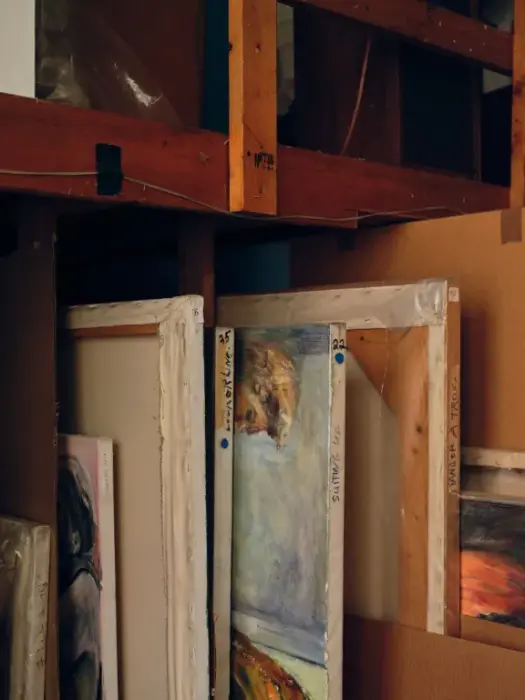
Evaluating an oil painting’s quality can feel daunting, especially when you’re standing in front of a stretched canvas wondering what sets a masterpiece apart from a mediocre piece. Whether you’re buying art, building a collection, or simply want to sharpen your appreciation as part of the art community, knowing what to look for is crucial. This guide cuts through the fluff to give you actionable, straightforward criteria to assess an oil painting’s quality, whether it’s created by professional artists or beginner artists. We’ll focus on measurable aspects—painting composition, color, brushwork, perspective, and emotional resonance—while highlighting techniques like linear perspective in art and atmospheric perspective in art. We’ll also touch on practical elements like the painting process, drying time, and how to use quality materials for a permanent painting. By the end, you’ll have a mental checklist to confidently judge any painting, from oil on canvas to works on a wooden panel.
1. What to Look for in Composition
Composition is the foundation of a painting’s quality. It’s how the artist organizes elements to create a cohesive, engaging image that holds your attention, often following a clear painting structure.
How to Assess Balance and Structure with Perspective
A quality painting feels balanced, with no single area overpowering the rest. Check if the elements—figures, objects, or landscapes—are arranged to guide your eye naturally across the canvas. For example, in The Last Supper by Leonardo da Vinci, linear perspective in art draws your eye to Jesus at the center, with lines from the walls and ceiling converging at his head, a technique often used in figurative painting. To evaluate:
- Ask: Does the painting feel cluttered or empty in any area, like a wrinkled surface that distracts from the flow? A good composition distributes visual weight evenly.
- Look for: Linear perspective in art—are lines (like roads or walls) converging realistically toward a vanishing point? If they’re inconsistent (e.g., a building’s edges don’t align properly on a flat surface), it may signal weak technique, unless it’s intentional in abstract works where the true artist might break rules for effect.
.webp)
Tips for Spotting Focal Points in the Painting Process
Every strong painting has a clear focal point where your eye lands first. This could be a vibrant color, a figure’s face, or a dramatic object. For instance, in Van Gogh’s Starry Night, the swirling sky grabs attention before you notice the quieter village below, often achieved through the painting technique of softening backgrounds. To assess:
- Ask: Where does my eye go first? Does the painting guide me there deliberately through contrast, size, or placement, as part of a thoughtful painting process?
- Look for: Atmospheric perspective in art—distant elements should be softer or less detailed to emphasize the focal point, often using a cool color to create distance. If the background competes with the foreground, the composition may feel chaotic, especially if the paint film isn’t applied evenly.
2. How to Evaluate Color and Light
Color and light are the soul of an oil painting, shaping its mood and showcasing the artist’s technical skill, often influenced by the color temperature and color pigments used.
What to Look for in Color Harmony and Pigments
A high-quality painting uses colors that work together to create a unified effect, often following a color palette that includes primary colors, warm colors, and brilliant color. For example, Monet’s Water Lilies uses soft greens and blues to evoke calm, with pops of pink for contrast, showcasing saturated colors. To evaluate:
- Ask: Do the colors feel cohesive, or do they clash? A jarring palette (e.g., neon green next to muddy brown without purpose, or a bleached colour) often indicates lower quality, especially if the color pigments lack vibrancy.
- Look for: Smooth transitions between colors (gradients in skies or skin tones) or intentional contrasts that highlight key areas, avoiding blocks of colour that feel unnatural. Check if warm colors (reds, oranges) and cool color tones (blues, greens) are balanced to suit the painting’s mood, ensuring the correct color application.
.webp)
Guide to Assessing Light and Shadow with Oil Mediums
Light and shadow add depth and realism, often enhanced by the right oil medium or oil painting medium. In Rembrandt’s portraits, light often highlights a face against a dark background, creating a dramatic, three-dimensional effect, a technique that benefits from understanding the oil content. To assess:
- Ask: Does light make objects pop off the canvas, like a fruit in a still life looking round and solid on a glossier surface or matte surfaces?
- Look for: Atmospheric perspective in art in landscapes—closer objects should have brighter, warmer tones, while distant ones are cooler and less distinct, often using white spirit or mineral spirit (like odourless mineral) to blend. For example, in a mountain scene, foreground trees should be vivid, while distant peaks appear hazy and blue, reflecting a slow drying or slower drying process. Inconsistent lighting (e.g., shadows falling in random directions) can reveal amateur work, especially if the mass of paint will dry unevenly.
3. Tips for Judging Brushwork and Technique
Brushwork is the artist’s signature, revealing their skill and intent. Oil paint’s versatility allows for a range of effects, from bold to delicate, often using the right brush for oil paints or oil painting brushes.
How to Spot Skilled Brushwork with Painting Techniques
Quality brushwork shows confidence and purpose, often following a variety of techniques. In John Singer Sargent’s portraits, fine strokes capture the sheen of silk, while looser ones suggest movement in backgrounds, a hallmark of direct painting. To evaluate:
- Ask: Are the brushstrokes deliberate, varying to match the subject (e.g., thick for rugged terrain, fine for details like hair), especially when using painting tools like painting tools/silicone?
- Look for: Precision in techniques like linear perspective in art, where crisp lines define architecture or horizons, often seen in entire painting processes. Sloppy or hesitant strokes, like uneven lines in a building, can indicate less skill, unless the looseness is stylistic (e.g., Impressionism), where fresh paint keeps the paint workable.
What to Look for in Texture and Paint Application
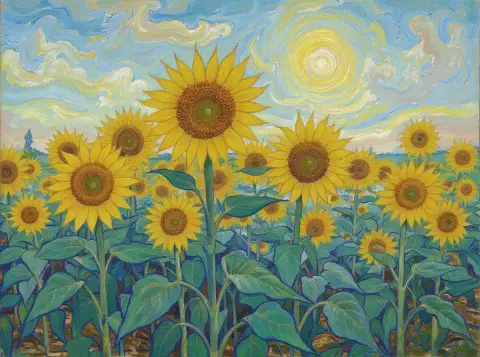
Texture brings a painting to life, often enhanced by textural paint or tube paint. In Van Gogh’s works, thick, swirling strokes create energy in skies or fields, often using mixable oil paints or soluble oil paints. To assess:
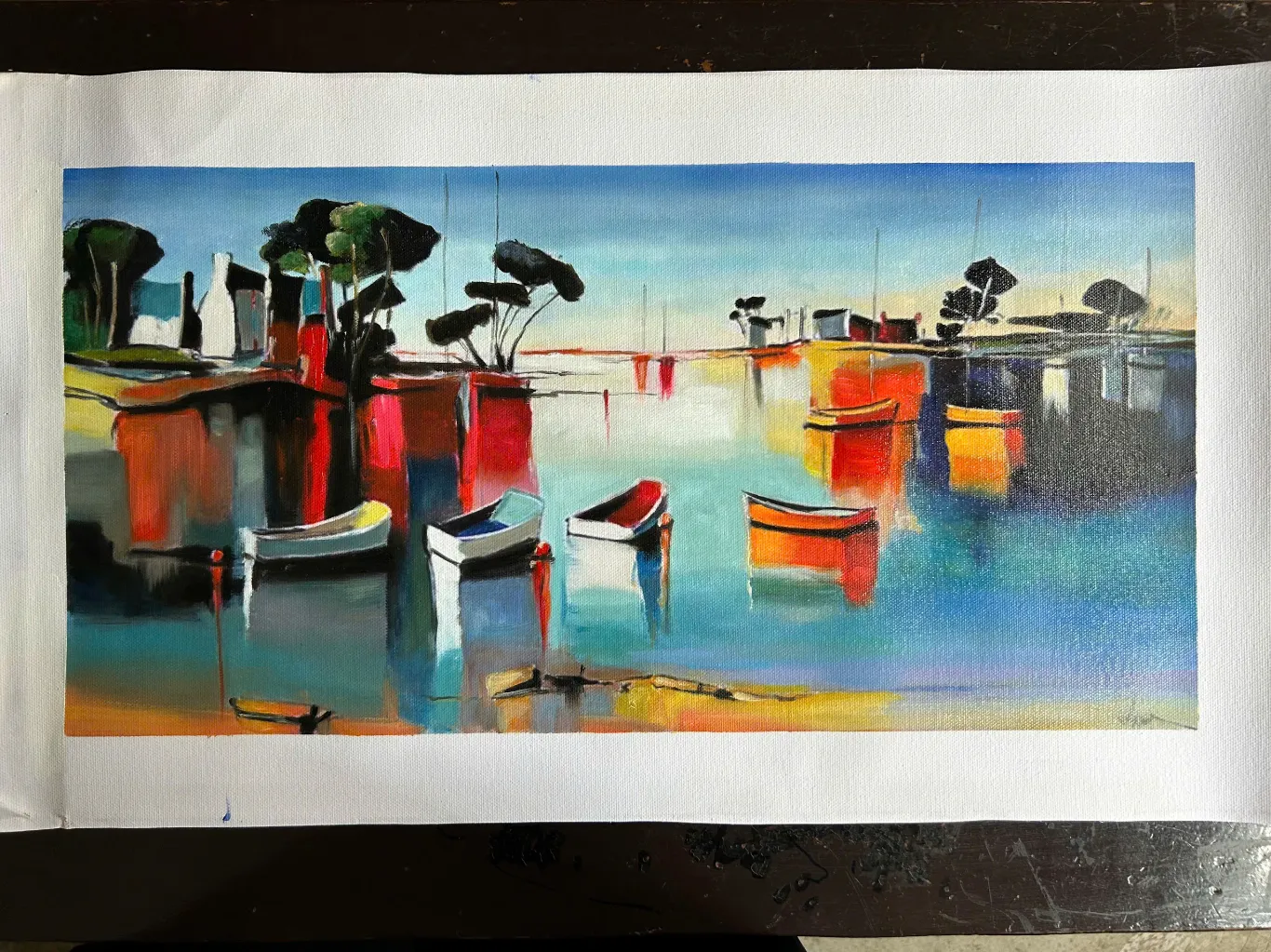
Artist at Lenoir Decor applying thick impasto layers for museum-quality paintings
- Ask: Does the texture enhance the subject? For example, rough strokes for a stormy sea versus smooth ones for a calm lake, possibly using a glossy or semi-matt finish.
- Look for: Varied paint thickness—impasto (thick, raised paint) for emphasis or thin glazes for subtle effects, like an extra coat for depth. A flat, uniform surface often feels lifeless, especially if the paint neat application lacks depth, or if toxic paints were used poorly.
4. Guide to Understanding Perspective
Perspective transforms a flat canvas into a believable world, making it a key factor in creating high-quality artwork, often influenced by the fat-over-lean rule. Two essential techniques—linear perspective in art and atmospheric perspective in art—are critical for depth and realism, especially when using natural bristle brushes or acrylic painters. These methods ensure a glossier finish and are often applied with refined linseed oil or quick-drying Liquin medium for optimal results.
How to Identify Linear Perspective in Art with Layers
Linear perspective in art employs converging lines to create depth, typically built through painting in layers or layers of paint. In Raphael’s School of Athens, architectural lines guide the eye to a vanishing point, enhancing the expansive feel, often achieved with cobalt blue or blue hue for vibrant tones. To evaluate:
- Ask: Do lines (e.g., edges of buildings or roads) converge realistically at a single point, adhering to the lean rule or fat-over-lean rule for stability? This is crucial when working on a rigid support like a wooden panel.
- Look for: Consistent scale—objects farther away should appear smaller, often protected with varnish layers. If a distant figure matches the size of a nearby one without artistic intent, it’s a flaw, particularly with direct light highlighting inconsistencies.
Tips for Recognizing Atmospheric Perspective in Art
Atmospheric perspective in art mimics how the atmosphere blurs distant objects, often using soft resins or synthetic resins to blend colors seamlessly. In Turner’s landscapes, distant hills appear pale and hazy with microscopic texture, while foreground elements remain sharp, reflecting a waiting period for layers to dry with plenty of time. To assess:
- Ask: Are distant objects softer, cooler in tone (blues, grays), and less detailed than closer ones, possibly enhanced with white paint to soften edges? This technique is common with a white canvas or oil portraits.
- Look for: Gradual fading of contrast and color intensity as objects recede, often on a white canvas. If everything remains equally sharp, the painting may lack depth, especially if dry paint layers weren’t applied with care using mixable oil colour value.
5. What to Look for in Emotional Impact
A great painting doesn’t just impress technically—it moves you. Emotional resonance is what makes art memorable, often tied to oil painting myths we believe about expression, crafted by a skilful artist or abstract artists. This impact is heightened with artist quality materials like Golden Artist Colors or natural bristle brushes.
How to Gauge Emotional Depth with Color Choices
A quality painting evokes a clear mood or story, often using saturated colors. In Frida Kahlo’s self-portraits, her intense gaze and vivid colors convey pain or strength, a trait of a wooden artist with deep intent, possibly using a colour value pack for rich hues. To evaluate:
- Ask: Does the painting make me feel something—joy, sadness, awe? If it leaves you cold, it may lack depth, even if it uses brilliant color or original colour.
- Look for: Expressive elements, like a figure’s posture or a dramatic sky painted at the National Portrait Gallery. Even abstract works can evoke emotion through color or shape, though they may skip linear perspective in art, focusing instead on texture of hog hairs or black hog bristle brush techniques.

Tips for Connecting with the Artist’s Intent
Understanding the artist’s purpose adds depth to your judgment, often requiring an understanding of their context. For example, a landscape using atmospheric perspective in art might reflect the artist’s awe of nature’s vastness, possibly an unidentified artist with a unique vision. To assess:
- Ask: Does the painting hint at a story or emotion through its elements (e.g., a solitary figure for loneliness), perhaps using cool color for mood?
- Look for: Subtle clues, like symbolic objects (a wilting flower for decay) or color choices (dark tones for melancholy), often enhanced by color temperature. Researching the artist’s context, like their use of oil painting brands, can help, but the painting should speak for itself.
6. Practical Tips for Assessing Quality in Person
Seeing a painting up close reveals details you can’t catch in photos, especially when evaluating the type of surface quality. Here’s how to inspect it like a pro, whether at art stores or galleries.
How to Inspect Craftsmanship and Materials
Quality paintings are built to last, often using oil binders to ensure durability. Check the canvas and paint, whether it’s a matte finish or a glossy finish:
- Ask: Are there cracks, fading, or poor repairs, like a wrinkled surface? High-quality works use quality materials (e.g., linen canvas, lightfast pigments, oil paint colours).
- Look for: Clean edges and even paint application, often on a stretched canvas or oil on canvas. Messy edges or thin, patchy paint can suggest rushed work, especially if the paint film lacks strength.
Guide to Evaluating Originality with Support
A great painting feels fresh, even if it uses traditional techniques, often on a rigid support like a wooden panel. Compare it to others from the same period—does it stand out? For example, while many oil painters use linear perspective in art, a unique twist (like Picasso’s fragmented perspectives) shows creativity. Copycat works that mimic without innovation often feel flat, especially if they lack painting composition depth or a perfect time in execution.
7. Common Mistakes to Avoid
When judging quality, avoid these pitfalls, especially when debunking oil painting myths:
- Focusing on one element: Don’t obsess over bright colors and ignore poor composition, even if the color palette is stunning.
- Mistaking simplicity for low quality: Minimalist works can be masterful if intentional, often using acrylic paint or acrylic painting for contrast.
- Letting taste cloud judgment: You may dislike a style (e.g., abstract art with cool color), but that doesn’t mean it’s poorly done by a true artist.
- Ignoring authenticity: Beware of fakes—check provenance or consult experts before buying, especially with Michael Harding pigments or other premium brands.
8. Final Thoughts
Judging the quality of an oil painting is a skill that transforms how you experience art. With this checklist—composition, color, brushwork, perspective (linear and atmospheric), and emotional impact—you’re equipped to spot excellence in any canvas, whether it’s a single layer or a complex painting in layers. Next time you’re at a gallery or auction, pause and apply these tips: scan for balanced composition, check color harmony, feel the texture, and let the painting’s mood sink in. Hungry for more art insights? Check out our other blog post guides on topics like choosing the best oil painting brushes, mastering the painting technique for beginners, or exploring the painting structure of iconic works—there’s a whole world of creativity waiting for you!
.webp)